When polyacrylamide (PAM) is not working, check the polymer grade, actual dose, solution preparation, mixing conditions and water chemistry before increasing chemical consumption. Cloudy overflow, weak flocs or poor dewatering can have several causes, and appearance alone does not identify the fault.
This guide focuses on abnormal performance: clumps, incomplete dissolution, weak flocs, cloudy overflow and unstable dewatering. It explains six causes and a practical sequence for separating them. For normal wetting, hydration, dilution and batch handling, use the PAM solution preparation guide. For the product range, see polyacrylamide grades.
Start with the Symptom, Then Check the Cause
| Observed problem | First comparison |
|---|---|
| Clumps or incomplete dissolution | Compare the plant batch with a fresh reference prepared to the current grade instructions. |
| Cloudy water or weak flocs | Check actual dose delivery and compare a controlled dose range on the same feed sample. |
| Good laboratory result but poor plant result | Review injection distribution, transfer shear, hydraulics and equipment conditions. |
| Performance varies during a shift | Match the time of deterioration to feed changes, solution batch age, water source and pump delivery. |
Why Is Polyacrylamide Not Working?
PAM performance depends on the interaction between the polymer, suspended solids and the treatment process. A grade that works on one wastewater or sludge may perform differently after changes in feed composition, coagulant use, pH, salinity or equipment operation. First compare a freshly prepared reference solution with the plant solution on the same representative sample.
6 Causes of Poor PAM Performance and How to Investigate Them
1. Incorrect Ionic Type or Charge Density
Anionic, cationic and nonionic PAM grades differ in their interactions with particles. Organic sludge often responds to cationic grades, while some mineral suspensions respond to anionic grades, but these are screening tendencies rather than universal selection rules.
What to check: compare candidate ionic types, charge densities and molecular-weight ranges in controlled tests. Include the current coagulant program and target solids in the comparison. Zeta potential can provide supporting information, but it does not replace performance testing. Read the anionic versus cationic PAM selection guide.
2. Under-Dosing, Over-Dosing or an Incorrect Dose Calculation
Too little polymer may leave fine solids dispersed. Excess polymer can also worsen separation or produce undesirable viscosity. Similar symptoms can arise from a wrong dilution factor, pump calibration or an unstable feed flow.
What to check: verify the stock concentration, dosing-pump delivery and flow measurement using the PAM dosage calculation guide. State whether the dose is based on commercial product, active polymer, liquid volume or dry solids. Test a range around the current dose rather than assuming that more PAM will improve the result.
3. Excessive Shear or Poor Distribution
Insufficient distribution can prevent polymer from contacting the solids. Excessive shear after preparation or floc formation can damage polymer performance or break flocs. The effect depends on the mixer, pump, residence time and polymer.
What to check: inspect the injection point, mixer settings and transfer path. Compare performance before and after suspect equipment. Do not apply a universal RPM limit: vessel size and impeller geometry change the mixing conditions. Use the product-form-specific preparation requirements when selecting a reference solution.
4. Incomplete Dissolution or Maturation
Adding powder too quickly can create gel-coated clumps or “fish eyes.” Poor wetting, inadequate preparation time, unsuitable solution concentration or cold make-up water can reduce the amount of usable polymer reaching the process.
What to check: compare a freshly prepared reference with the suspect plant batch on the same feed and dose basis. If the reference performs better, review the batch record, wetting equipment, preparation-water conditions and maturation stage before changing grade. Follow the normal preparation procedure for the reference batch.
5. Changes in pH, Alkalinity or Upstream Coagulation
Water chemistry affects particle surfaces, coagulant performance and polymer behavior. A change in pH or upstream chemical use can therefore alter flocculation even when the PAM grade and nominal dose remain unchanged.
What to check: record pH, alkalinity and upstream dosing alongside the performance change. Compare representative samples under controlled conditions. Establish any pH adjustment through treatment testing; do not assume that every process should be moved to one neutral pH range. For combined treatment, read how to use PAC and PAM together.
6. Unsuitable Make-Up Water, Temperature or Solution Age
Salinity, hardness, oxidants, temperature and contamination can affect preparation or solution stability. A solution held beyond its useful storage period may perform differently from a fresh batch.
What to check: compare fresh solutions prepared with the usual make-up water and a suitable reference water. Record water quality, solution temperature and storage time. Confirm grade-specific storage and use limits rather than relying on a universal shelf life or temperature cutoff.
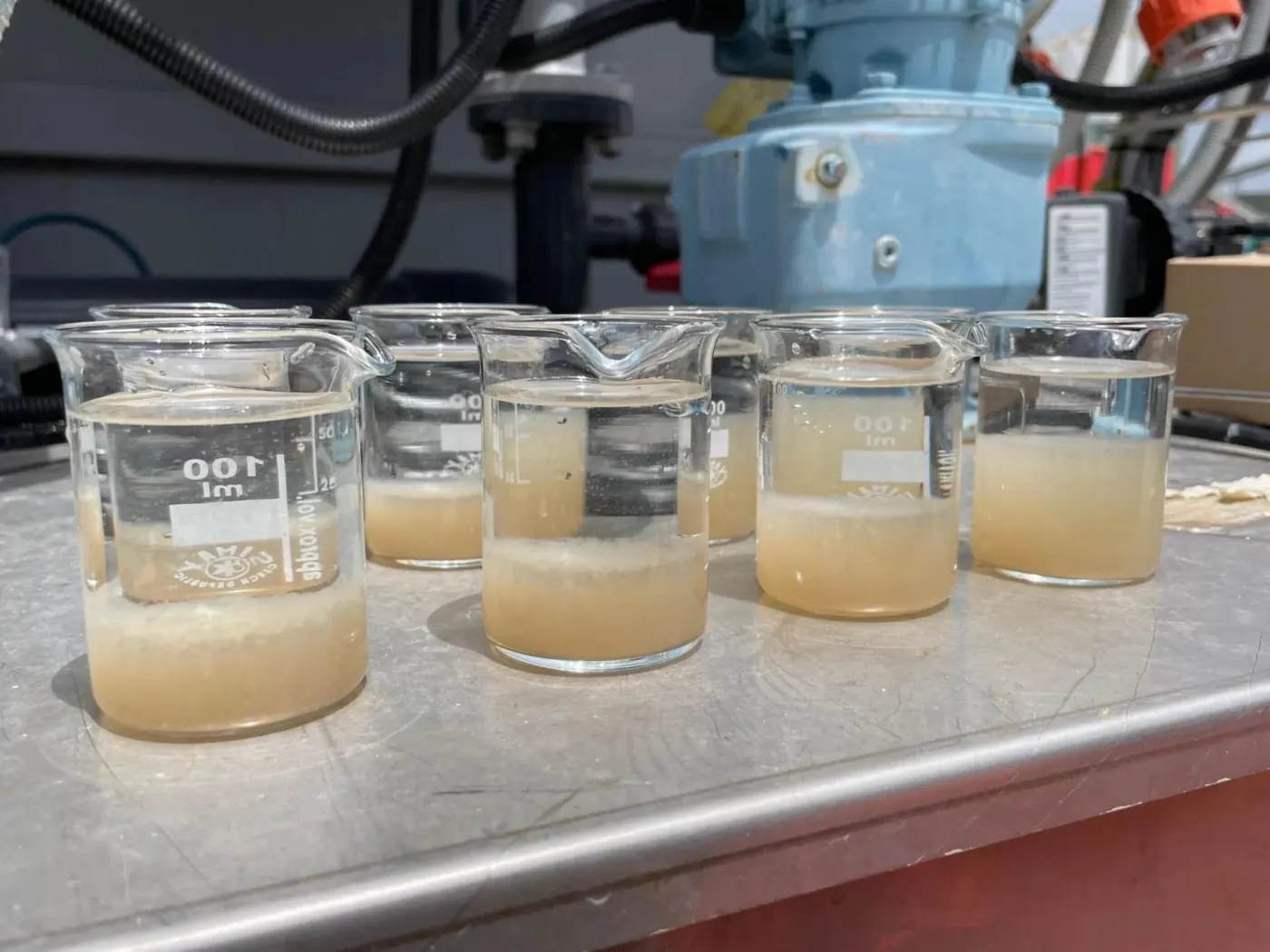
A Jar-Test Sequence for Troubleshooting PAM
- Take a representative sample. Record the sample source, time, temperature, pH, solids information and current treatment chemicals.
- Prepare a reference solution. Follow the supplier’s procedure and record concentration, active-matter basis, preparation water and maturation time.
- Keep the comparison controlled. Use equal sample volumes and consistent mixing and observation conditions. Include an untreated control and the current treatment as references.
- Change one factor at a time. Compare dose first with the same grade, then compare candidate grades or preparation conditions as needed.
- Assess more than floc size. Record clarified-water quality, settling or flotation behavior, sludge volume and relevant dewatering results. Large flocs alone do not establish the best treatment.
- Confirm under operating conditions. Check the selected option with the actual equipment and treatment targets before routine implementation.
For dose calculations, use consistent units: dose (mg/L) = solution concentration (mg/mL) × solution added (mL) ÷ sample volume (L). Label whether the concentration represents commercial product or active polymer; do not compare results calculated on different bases.
Use the Comparison to Choose the Next Investigation
- Fresh reference works; plant batch does not: investigate preparation, contamination, storage conditions and the concentration record.
- Both solutions work in the laboratory; the plant result is poor: investigate dose delivery, distribution, transfer shear and equipment operation.
- Neither solution works on the current feed: review feed changes, coagulant conditions and grade suitability through controlled screening.
These comparisons narrow the investigation; they do not prove a single cause. Change one factor at a time and verify the effect before adopting a new setting or product. Keep routine preparation and storage instructions in the PAM preparation guide.
Diagnostic Questions
How can I tell whether PAM is over-dosed?
Viscosity or poor clarification alone does not prove over-dosing. Verify the concentration and pump delivery, then compare several doses on the same representative feed under consistent mixing and observation conditions.
Why can fresh PAM solution work better than the plant batch?
The difference may involve preparation quality, concentration, water source, contamination or solution age. Compare both batches on the same feed and dose basis, then use batch records and one-factor comparisons to narrow the cause.
Why does PAM work in a jar test but not in the plant?
Laboratory and plant conditions may differ in sample representativeness, dose delivery, injection distribution, mixing, transfer shear or equipment loading. Check these differences before attributing the result to the polymer grade.
Can large flocs still give poor dewatering?
Yes. Floc size alone does not establish solids capture, filtrate clarity, cake solids or throughput. Compare the indicators required by the actual separation equipment and check whether flocs change during transfer.
Information to Send for PAM Grade Review
Provide the current grade or TDS, application, wastewater or sludge characteristics, preparation method, dose basis, operating conditions and jar-test observations. For supply review, include quantity, packaging and destination through the YuXing contact page.