Polyacrylamide (PAM) Flocculant
- Molecular Formula:
- (C₃H₅NO)ₙ
- Types:
- Anionic / Cationic / Non-ionic / Amphoteric
- Solid content:
- ≥88%
- Molecular weight range:
- 3–22 million
- Application:
- Tailings dewatering / wastewater / sludge
- CAS No.:
- 9003-05-8
- HS Code:
- 3906901000
Polyacrylamide PAM Specifications
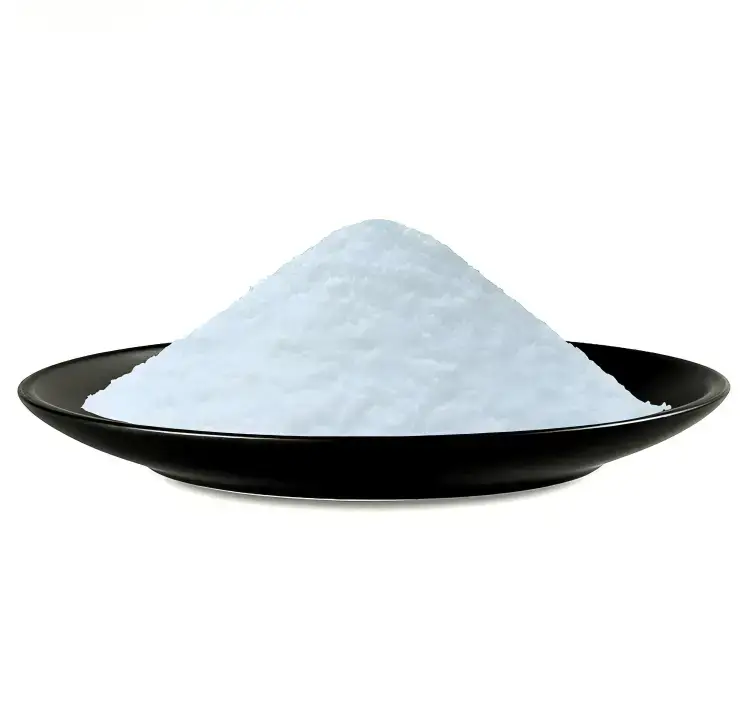
YuXing polyacrylamide (PAM) is a high-molecular-weight flocculant supplied as white powder for mining tailings dewatering, thickener clarification, wastewater treatment and sludge dewatering. We supply anionic, cationic, non-ionic and amphoteric PAM grades with solid content ≥88%, grade selection support and export documents for bulk buyers.
For mining operations, anionic PAM is commonly used in alkaline process water containing inorganic mineral fines. The final grade should be selected by jar test because slurry pH, solids content, particle size distribution and water chemistry strongly affect flocculation performance.
| Type | Molecular Weight | Solid Content | Ionicity / Hydrolysis | Typical Application |
|---|---|---|---|---|
| Anionic PAM | 3-22 million | ≥88% | Hydrolysis: 10-35% | Mining tailings dewatering, thickener clarification, mineral slurry settling |
| Cationic PAM | 5-12 million | ≥88% | Ionicity: 10-60% | Organic sludge dewatering, municipal and industrial wastewater |
| Non-ionic PAM | 6-12 million | ≥88% | Hydrolysis: 0-8% | Neutral pH systems, coal washing, selective flocculation tests |
| Amphoteric PAM | 5-12 million | ≥88% | Ionicity: 5-50% | Complex wastewater and mixed-charge slurry systems |
PAM for Mining Tailings Dewatering
In tailings thickening and dewatering, PAM links fine particles into larger flocs so that solids settle faster and clearer water can be recycled. Correct PAM selection can improve overflow clarity, increase underflow density, reduce suspended solids and support stable operation of thickeners, settling ponds and filter press systems.
Typical effective dosage is often in the 1-10 ppm range, but actual dosage depends on ore type, clay content, slurry density, pH, water salinity and target settling rate. Overdosing can create sticky flocs or reduce process stability, so jar testing and controlled dilution are important before bulk use.
For a detailed mining-use article, see our polyacrylamide for tailings dewatering guide. For related reagents, browse the mining chemicals catalog.
How to Select the Right PAM Grade
PAM grade selection should be based on process conditions instead of product name alone. Buyers should confirm the application, water chemistry, particle charge, molecular weight requirement, ionic degree and dosage target before confirming bulk purchase.
| Selection Factor | Why It Matters |
|---|---|
| Application | Tailings, wastewater, sludge and mineral processing circuits require different charge types and molecular weights. |
| Charge type | Anionic PAM is common for inorganic mineral fines; cationic PAM is often used for organic sludge. |
| Molecular weight | Higher molecular weight can improve floc strength for fine tailings, but may not suit every slurry. |
| Ionicity / hydrolysis | Affects adsorption, bridging and charge neutralization behavior. |
| Dissolution and dosing | PAM should be fully dissolved and properly diluted before dosing to avoid fish-eyes and unstable results. |
| Jar test result | Confirms settling rate, supernatant clarity, floc size and optimum dosage before bulk use. |
Anionic vs Cationic vs Non-ionic PAM
Anionic PAM is usually the first option for mining tailings with inorganic mineral particles, especially in alkaline process water. Cationic PAM is more suitable for organic-rich sludge and wastewater streams. Non-ionic PAM can be used in neutral or low-ionic-strength systems, while amphoteric PAM may help in mixed-charge or variable-pH applications.
If the current supplier grade is unstable or if your site is changing ore source, water quality or dewatering equipment, a fresh jar test is recommended before repeat purchase. YuXing can review your application information and suggest a grade range for testing.
Wastewater and Sludge Treatment Applications
Beyond mining, PAM is used for municipal wastewater, industrial wastewater clarification, sludge dewatering, papermaking retention and other solid-liquid separation processes. For these applications, cationic PAM is often considered when organic sludge is present, while anionic PAM can be used for inorganic suspended solids and clarification.
For broader treatment programs, review our water treatment chemicals. Mining operators can also see our mining and mineral processing solutions for tailings clarification, water recycling and supporting process chemicals.
Packaging and Bulk Supply
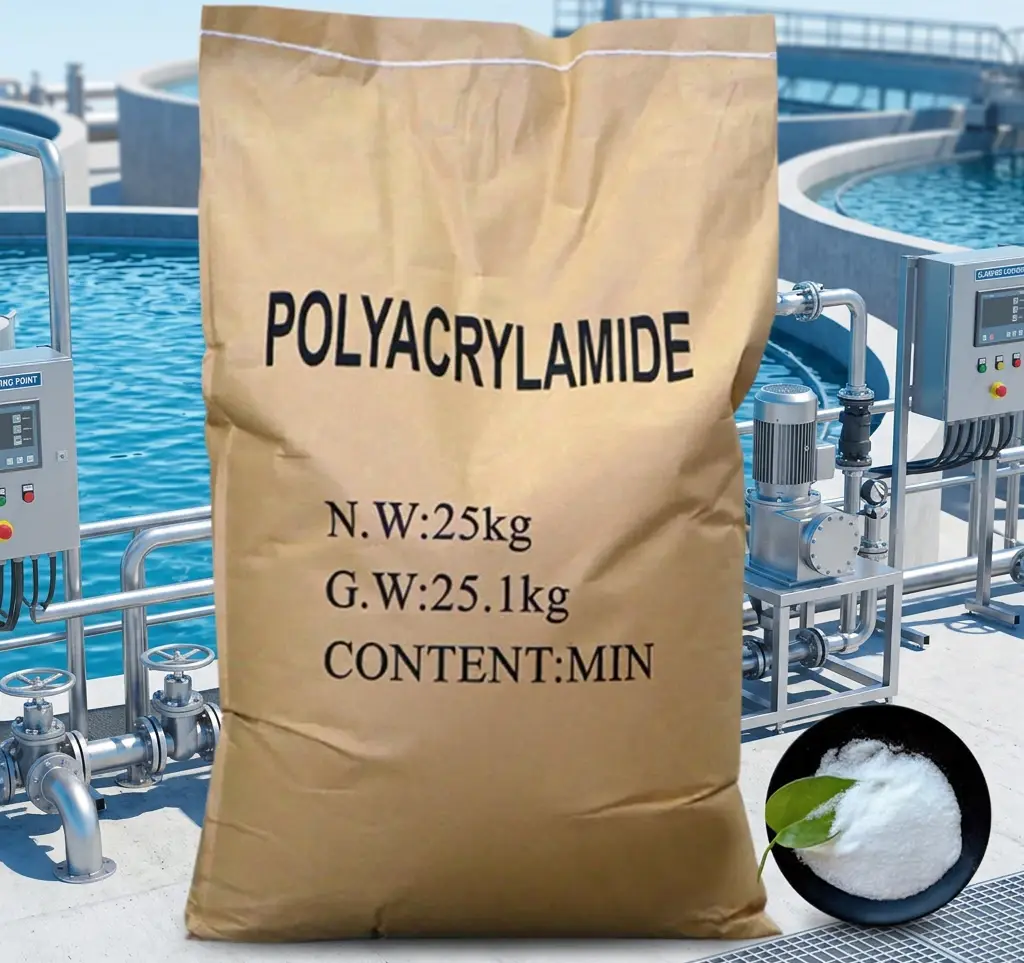
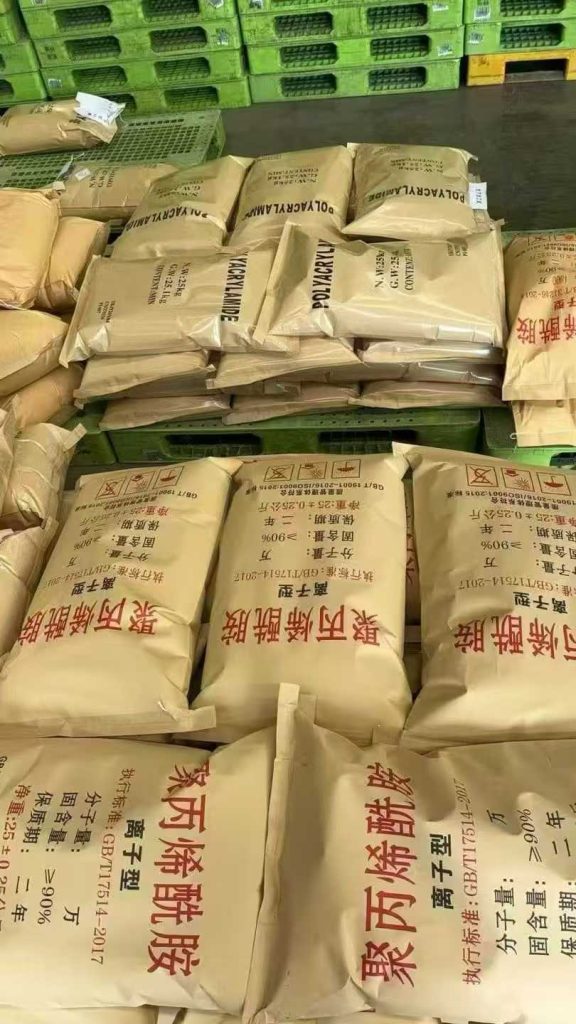
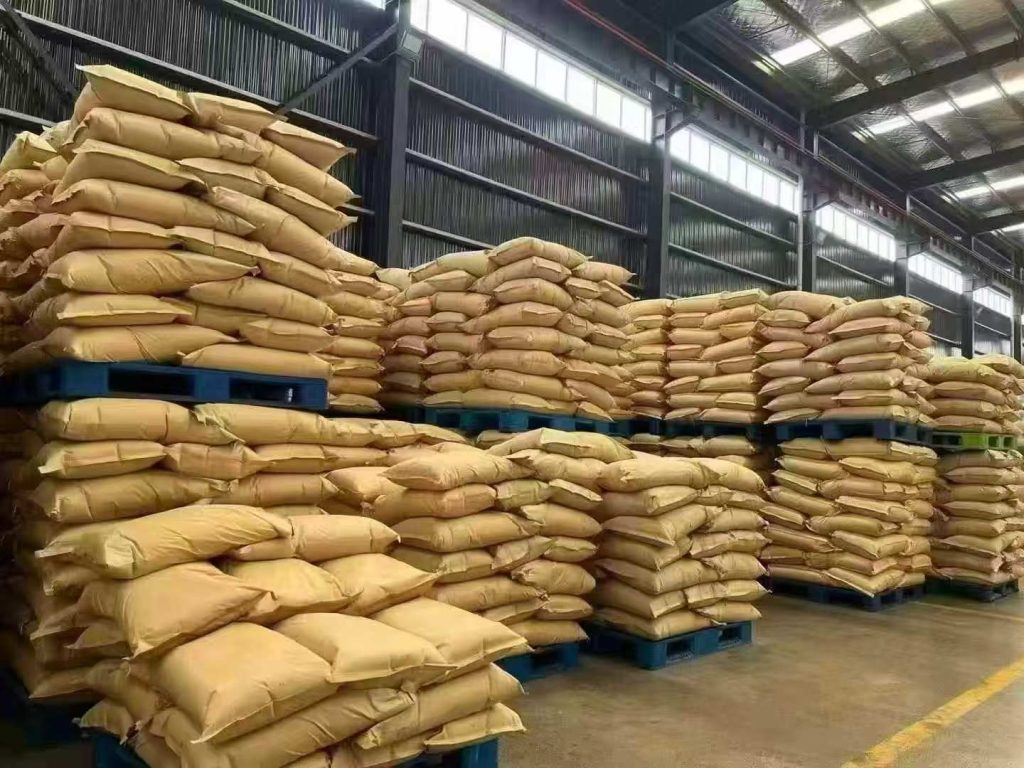
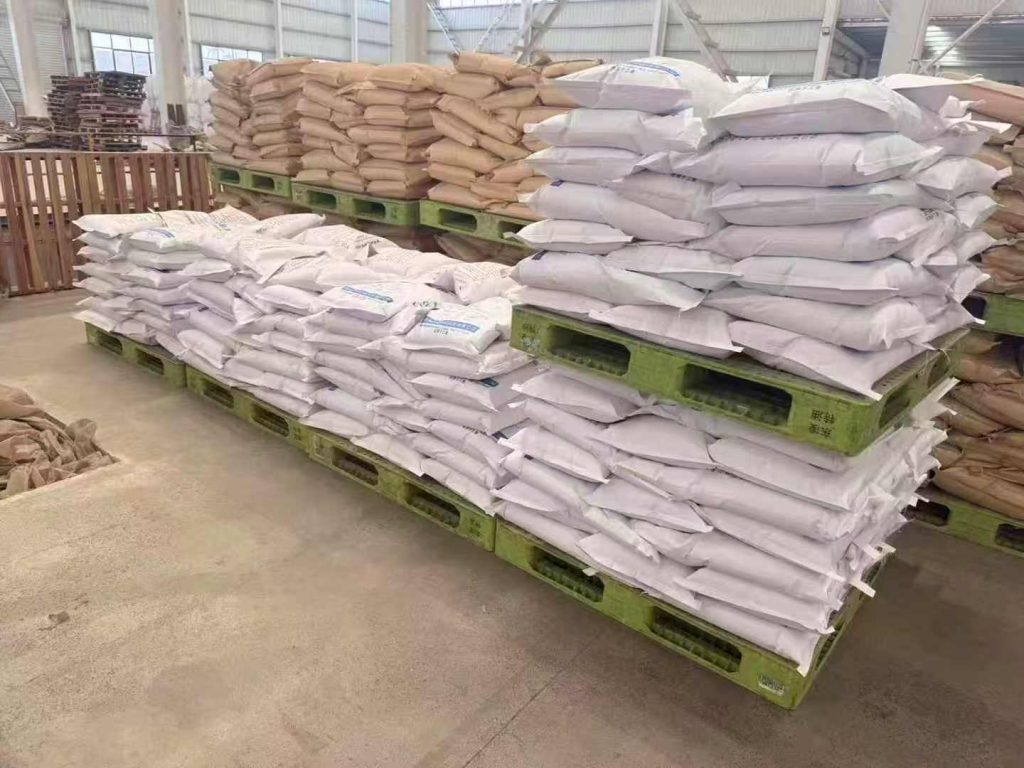
YuXing supplies PAM powder in moisture-protected export packaging for bulk shipment. Grade-specific technical data, safety information and batch quality documents can be provided after the application and product grade are confirmed as part of a formal quotation.
Why Choose YuXing PAM
- Full PAM range: anionic, cationic, non-ionic and amphoteric grades.
- Solid content ≥88% with molecular weight options for tailings, wastewater and sludge treatment.
- Grade selection support based on application, pH, solids content, particle size and jar test results.
- Grade-specific technical, safety and batch quality documentation after product confirmation.
- Mining and industrial supply experience for tailings dewatering and water recycling projects.
Information Needed for PAM Grade Selection
- Application: tailings thickener, filter press, wastewater, sludge dewatering or other process.
- Required type if known: anionic, cationic, non-ionic or amphoteric PAM.
- Slurry or water pH, solid content and particle size distribution.
- Target settling speed, underflow density or overflow clarity requirement.
- Current PAM type, molecular weight or supplier grade if replacing an existing product.
- Water sample or slurry sample availability for jar testing.
- Required quantity, destination port and packaging preference.
Request PAM grade selection with the details above. We will confirm suitable grade options, packaging, available documentation and quotation details for your destination.
PAM Flocculant vs PAC and PFS Coagulants
Polyacrylamide (PAM) is normally selected as a flocculant that bridges destabilized particles into larger flocs. In many water and wastewater systems, it performs a different function from inorganic coagulants, so PAM, PAC and PFS should not be compared only by price per kilogram.
For high-turbidity water or wastewater, poly aluminium chloride (PAC) or polyferric sulfate (PFS) may be evaluated for charge neutralization before a lower-dose PAM flocculant step. Jar testing should compare coagulant dose, PAM ionic type, molecular weight, make-down concentration, floc strength, settling and sludge dewatering performance.
Frequently Asked Questions
What is polyacrylamide used for in mining?
PAM is used as a flocculant in tailings dewatering, thickener clarification, sludge dewatering and wastewater treatment. It accelerates fine particle settling and improves water recycling in gold, copper, iron ore and other mining operations.
What is the difference between anionic and cationic PAM?
Anionic PAM is commonly used for inorganic mineral fines and alkaline mining tailings. Cationic PAM is often used for organic-rich sludge and wastewater. The correct type should be confirmed by jar testing.
Which type of PAM is best for tailings dewatering?
Anionic PAM is the most widely used type for mining tailings in alkaline process water with inorganic mineral particles. The optimal grade depends on slurry pH, solid content and particle size.
What is the typical PAM dosage for tailings?
Effective PAM concentration is often 1-10 ppm, but actual dosage depends on ore type, slurry density, water chemistry and target underflow concentration. Jar testing is recommended before bulk dosing.
How should polyacrylamide be dissolved before dosing?
PAM powder should be slowly added into water under controlled mixing and fully dissolved before dosing. Avoid adding dry powder directly into concentrated slurry because undissolved particles can reduce performance.
Can YuXing provide jar test samples?
YuXing can discuss sample and grade selection requirements according to the application, water chemistry, solids content and target dewatering performance.
What information should a buyer provide before ordering PAM?
Provide the application, slurry or wastewater characteristics, pH, solids content, current product grade, target performance, required quantity, packaging and destination port. This information helps narrow the PAM type and grade before sampling or quotation.
Shipment Photo:
Request a Quote
If you need polyacrylamide PAM flocculant for tailings dewatering, thickener clarification, wastewater or sludge treatment, contact YuXing with your application, required PAM type, molecular weight target, quantity and destination port. Our team will provide a quotation, available documents and grade selection support.
Product Information Notice
- The values shown are typical reference information and are not a guaranteed sales specification. Final specifications are subject to the confirmed product, grade and batch COA.
- Packaging, transport method and hazard classification must be confirmed according to product grade, order quantity, destination regulations, shipping route and the current SDS.
- TDS, SDS/MSDS and COA files are provided according to product, batch and destination requirements. Public documents should not be treated as final delivery documents unless issued for the current batch.
- This page is for procurement discussion and technical selection reference only. It does not replace safety, regulatory, process design or site operating advice. Users must follow local regulations and the latest SDS.
